
Low Frequency Transformer Design Guide
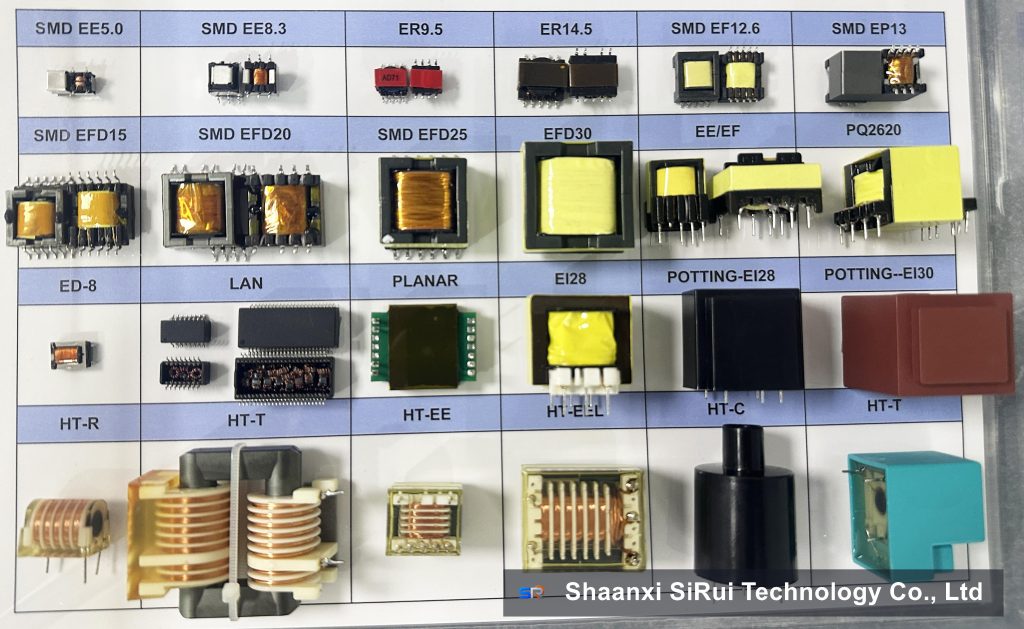
What Is a Low Frequency Transformer? A low frequency transformer operates at power frequencies of 50 Hz or 60 Hz, and is used to step up or step down AC voltage in power distribution, isolation, and instrumentation applications. Unlike high frequency transformers that rely on ferrite cores, low frequency transformers typically use grain-oriented silicon steel […]
Common Mode Choke Selection Guide: Impedance, Current Rating & Core Material
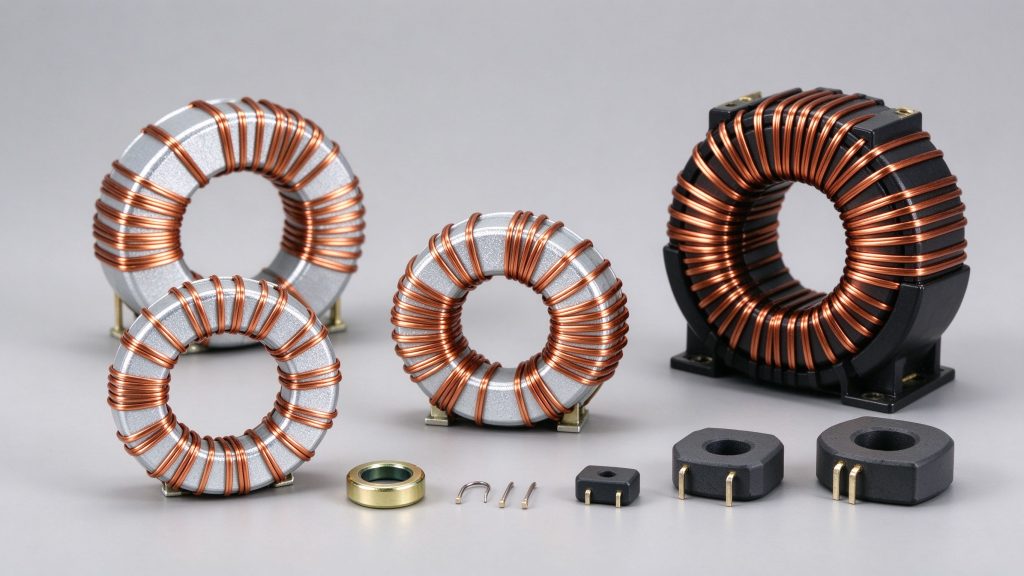
A common mode choke (CMC) is the first line of defense against conducted electromagnetic interference (EMI) in switch-mode power supplies, motor drives, solar inverters, EV chargers and other power electronics. Choosing the wrong choke can mean a failed EMC test, an overheated component, or an unstable power stage. This guide walks through the parameters that […]
Nanocrystalline vs Amorphous Core: Key Differences & How to Choose
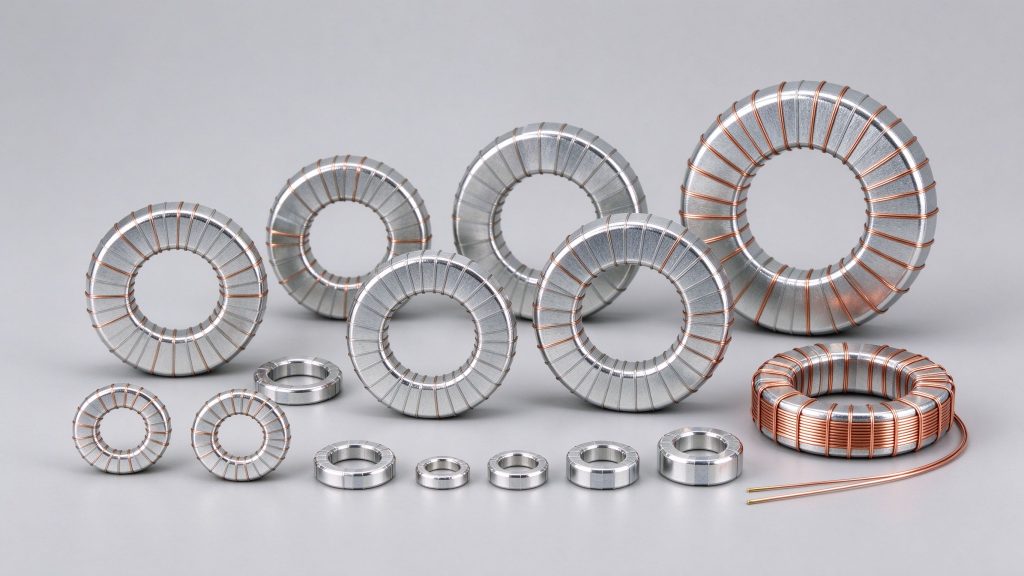
Nanocrystalline and amorphous cores are the two leading high-performance soft magnetic materials for transformers, chokes, and current sensors. Both are produced by rapid solidification of molten alloy, but they differ in microstructure, magnetic properties, and cost. Choosing between a nanocrystalline core and an amorphous core depends on your frequency, core loss budget, saturation requirement, and […]
EMI Choke Selection Guide: Impedance, Current Rating & Core Material
Selecting the right EMI choke is often the difference between passing and failing conducted emissions testing. The choke’s impedance, current rating, and core material must all match the noise spectrum, the line current, and the mechanical constraints of your power supply. This guide gives a practical, step-by-step method for choosing an EMI choke — whether […]
Current Transformer Saturation: Causes, Effects & How to Avoid It
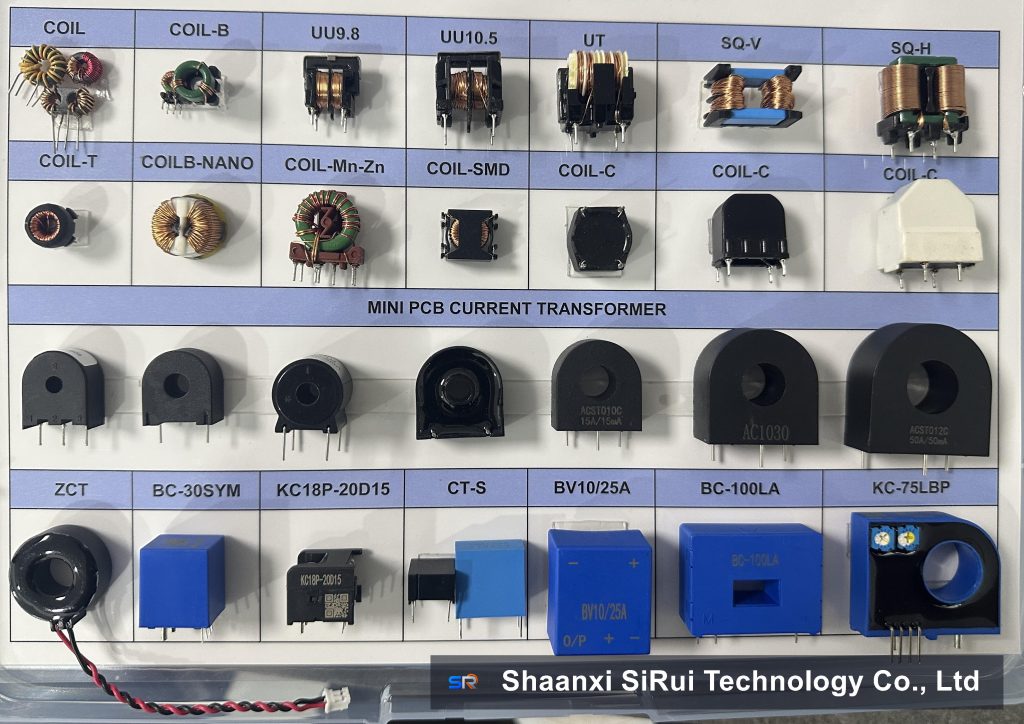
Current transformer saturation is one of the most common causes of metering errors, protection misoperation, and distorted current waveforms in power systems. When a current transformer (CT) saturates, its secondary output no longer accurately reflects the primary current — and in a protection or metering circuit, that can mean a false trip, a missed fault, […]
High Current Common Mode Choke: Design & Selection Guide
High-current common mode chokes are the workhorses of EMI filtering in EV chargers, solar inverters, three-phase motor drives, and high-power switch-mode power supplies. At currents of 10 A to 100 A or more, the choke must suppress common mode noise while carrying the full line current with minimal temperature rise and voltage drop. This guide […]
Planar Transformer vs Conventional Transformer: Pros, Cons & Selection Guide
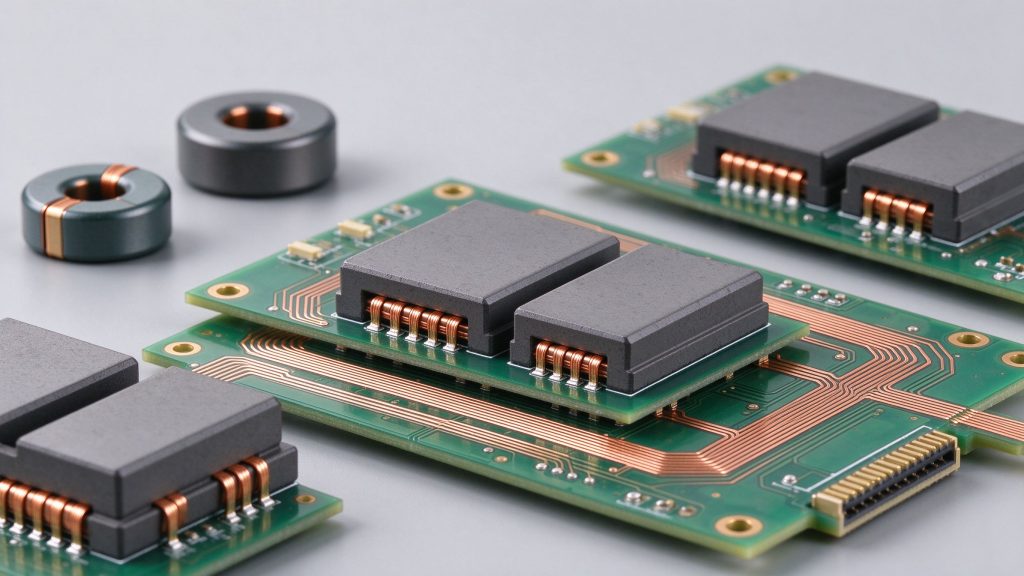
When a power design needs to shrink, run at high frequency, or meet strict thermal and consistency requirements, engineers compare two transformer technologies: planar transformers and conventional wire-wound transformers. Each has distinct strengths — planar magnetics excel at low profile, low leakage, and repeatable parasitics, while conventional transformers offer lower cost and higher power density […]
Flyback Transformer Design: Turns Ratio, Core Selection & Key Formulas
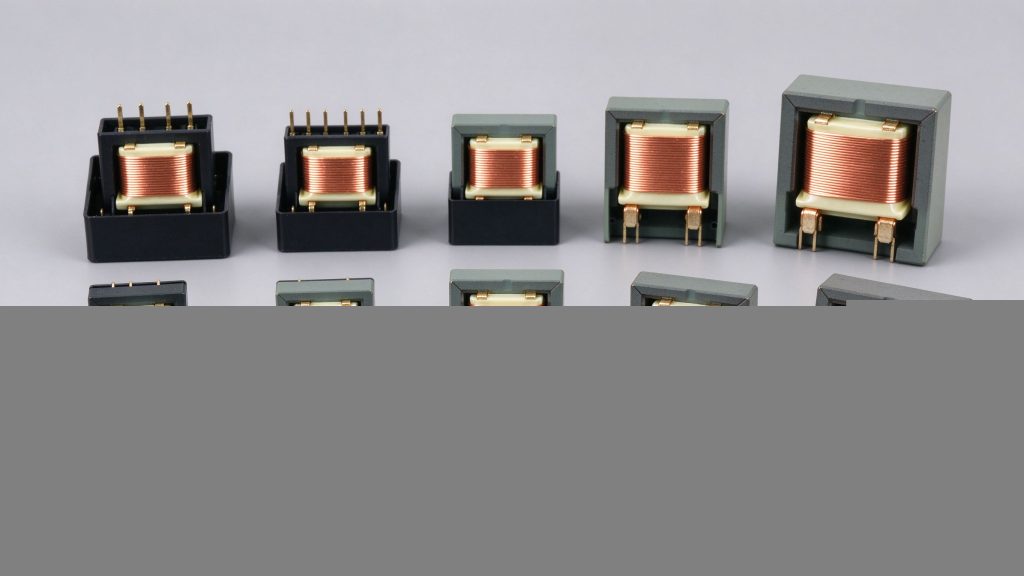
The flyback transformer is the heart of every flyback converter — one of the most popular topologies for offline power supplies from 5 W to 150 W. Unlike a normal transformer, a flyback transformer stores energy in the core during the on-time and releases it during the off-time, so its design balances turns ratio, primary […]
Sendust vs Iron Powder vs MPP Core: Alloy Powder Core Material Comparison for Power Inductors
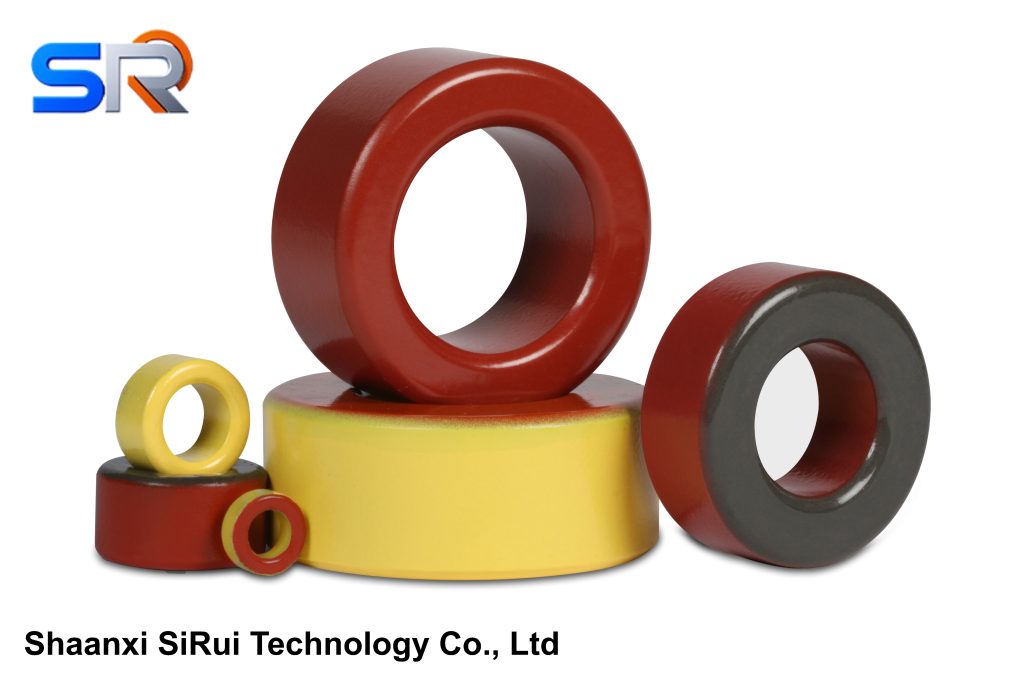
Choosing the right powder core is one of the most important decisions in power inductor and transformer design. Among the widely used alloy powder cores, three materials dominate: Sendust (iron-silicon-aluminium), iron powder, and MPP (molybdenum permalloy). Each offers a different trade-off between permeability, core loss, DC bias stability, and cost. This guide compares the three […]
How to Choose a Current Transformer for Energy Metering: PCB-Mount, Miniature & Precision CT Guide
Current transformers (CTs) are the sensing heart of every energy meter, watt-hour meter, and smart metering system. A well-chosen PCB current transformer or miniature current transformer determines metering accuracy, dynamic range, and long-term stability. This guide walks through the key specifications you must evaluate — accuracy class, burden, turns ratio, frequency, and mounting — and […]