
Differential Mode Choke vs Common Mode Choke: Working Principle, Key Differences & Selection Guide
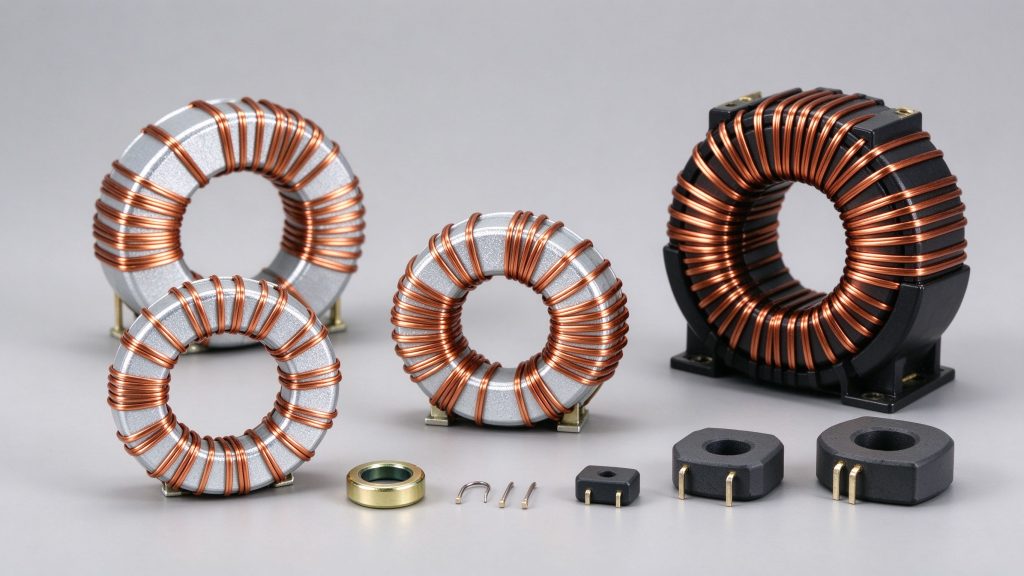
When designing an EMI filter for a switching power supply, motor drive, or grid-tied inverter, the choice between a common mode choke and a differential mode choke determines how effectively conducted noise is suppressed. Although both are wound on magnetic cores and share the same “choke” name, they target two completely different noise paths. This […]
Pulse Transformer: Working Principle, Design & Selection Guide
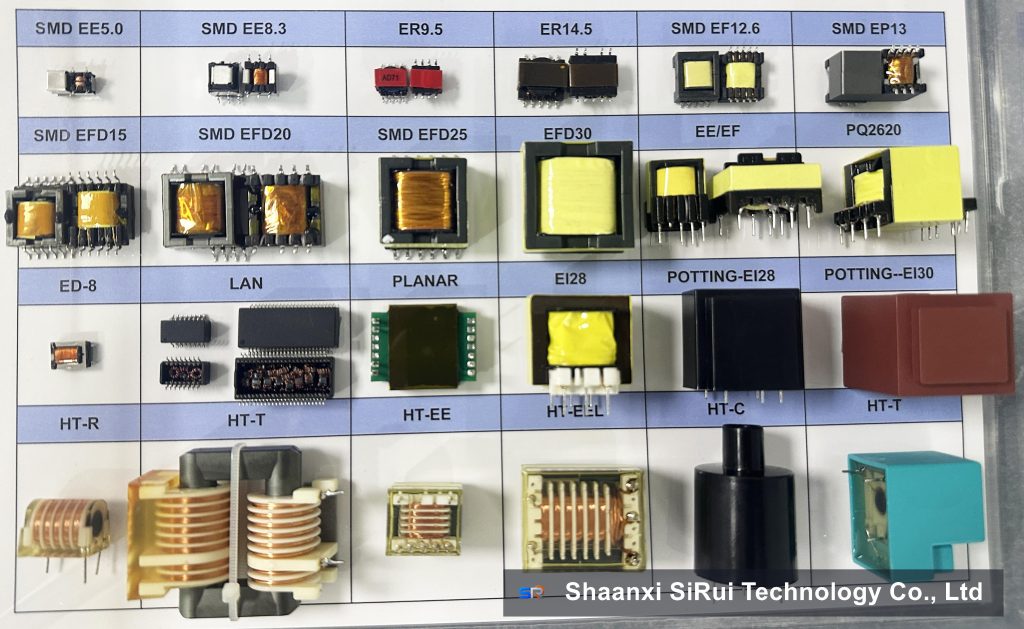
A pulse transformer is a specially designed transformer optimized to transmit rectangular electrical pulses with minimal distortion while providing voltage transformation and galvanic isolation. It is widely used in gate drive circuits, ignition systems, telecommunications, and power electronics. This guide explains the working principle of pulse transformers, the key parameters to consider, and how to […]
Rogowski Coil: Working Principle, Key Specs & Selection Guide
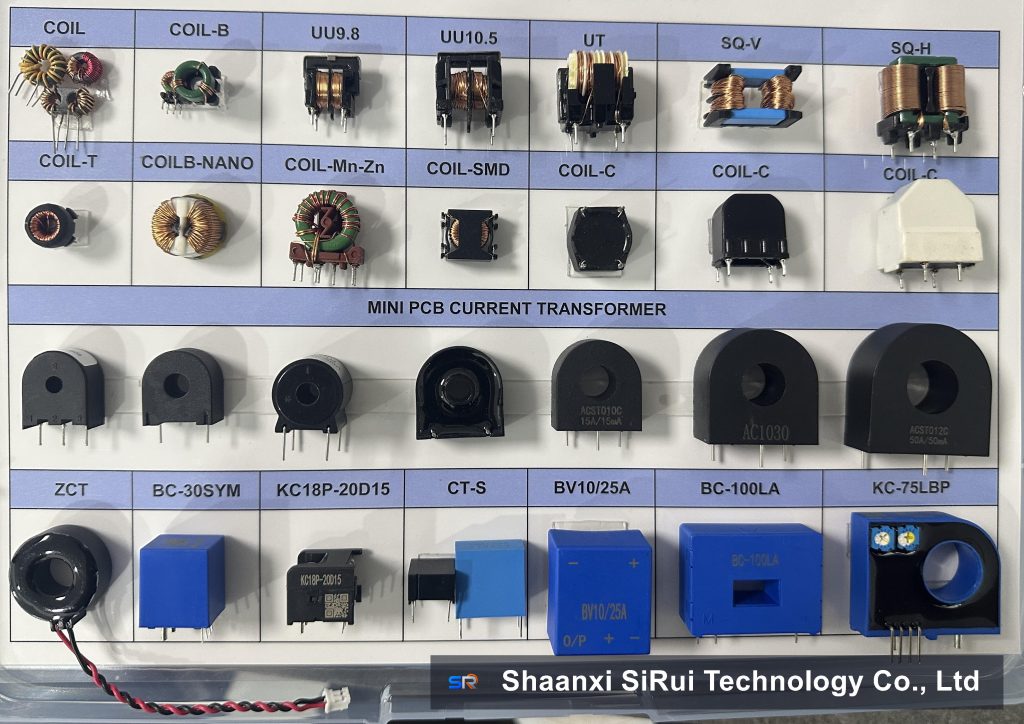
A Rogowski coil is an air-cored, flexible current measurement device used to measure alternating current (AC) and fast transient currents without a ferromagnetic core. Because it offers wide bandwidth, a linear response, and easy installation around large conductors, the Rogowski coil has become a preferred sensing solution in power electronics, renewable energy, and industrial automation. […]
Coupled Inductor: Working Principle, Design & Selection Guide
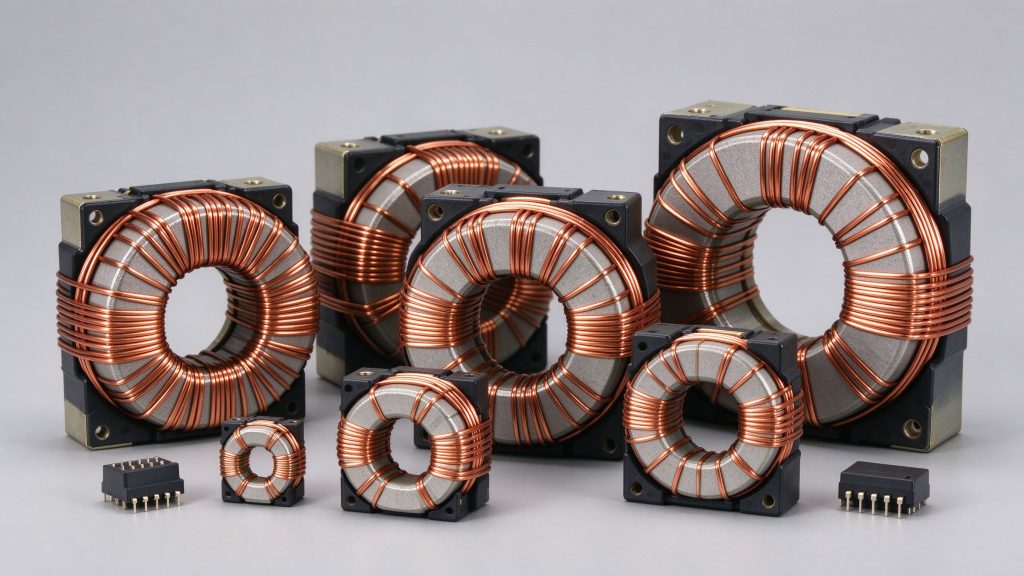
What Is a Coupled Inductor? A coupled inductor is a magnetic component that contains two or more windings on a single core, magnetically linked so that energy can transfer between them while also storing energy. It is a core building block in modern power electronics — used in flyback converters, SEPIC and Cuk converters, interleaved […]
Low Frequency Transformer: Working Principle, Design & Selection Guide
Low frequency transformer design guide and selection tips from Shaanxi SiRui Technology Co., Ltd.
Current Transformer Accuracy Class: Metering vs Protection CT Guide
What Is a Current Transformer Accuracy Class? A current transformer (CT) steps down high line currents to a measurable, safe level for meters, relays and instruments. Its accuracy class defines the maximum error the CT is allowed to introduce under specified conditions. Choosing the right accuracy class is essential: a metering application needs a small […]
PFC Inductor: Working Principle, Design & Selection Guide
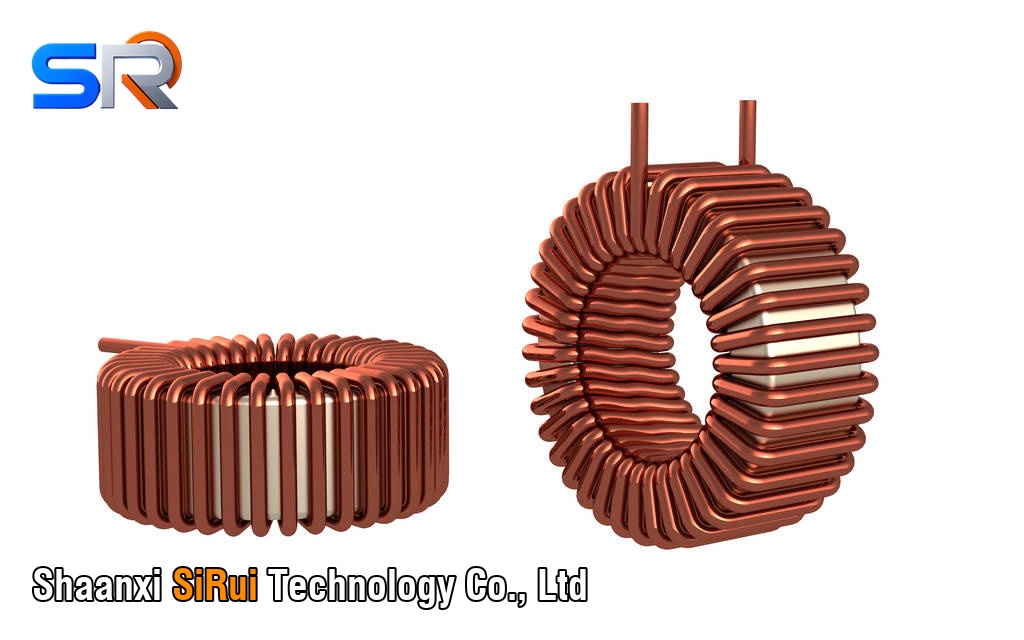
What Is a PFC Inductor? A PFC inductor is the key magnetic component in a power factor correction (PFC) stage. It shapes the input current of a power supply to follow the AC line voltage, reducing harmonic distortion and improving power factor in compliance with standards such as IEC 61000-3-2 and ENERGY STAR. PFC inductors […]
Gate Drive Transformer: Working Principle, Design & Selection Guide
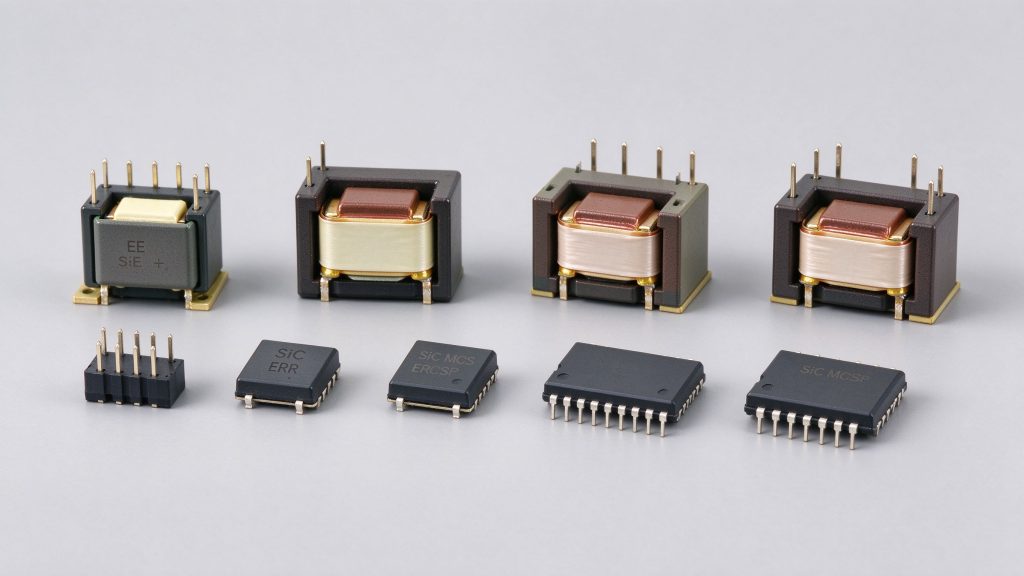
What Is a Gate Drive Transformer? A gate drive transformer (GDT) is an isolated magnetic component used to transmit PWM switching signals from a control IC to the gate terminals of power MOSFETs or IGBTs. It provides galvanic isolation between the low-voltage controller and the high-voltage power stage, while shaping the gate drive waveform with […]
Ni-Zn vs Mn-Zn Ferrite Core: Differences & How to Choose
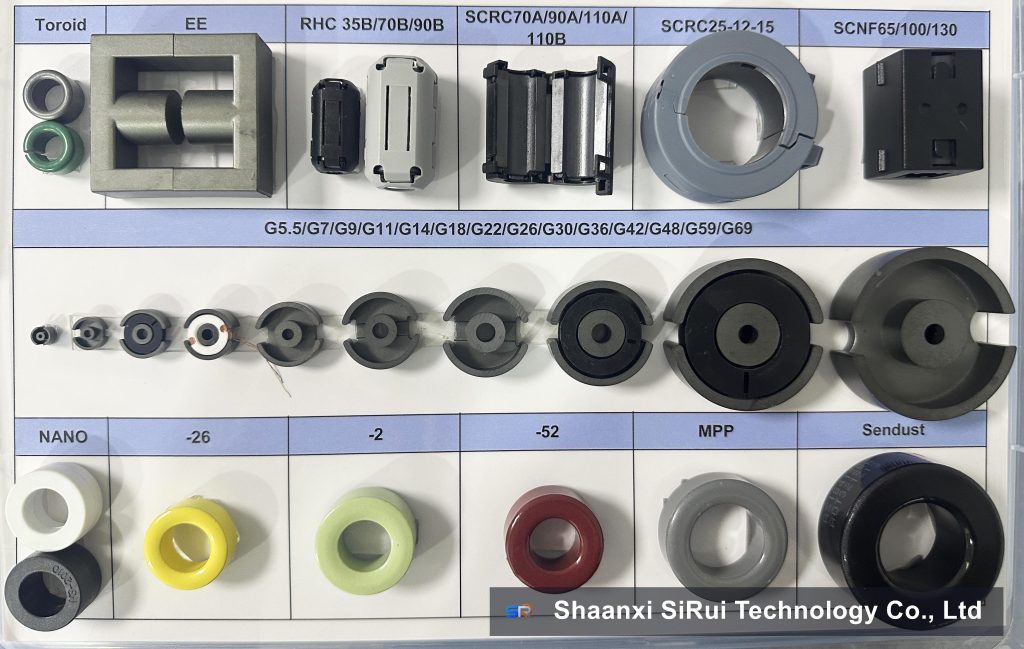
Ni-Zn and Mn-Zn are the two families of soft ferrite cores that dominate power, signal, and EMI applications – and choosing the wrong one costs you efficiency or bandwidth. This guide compares Ni-Zn and Mn-Zn ferrite cores on permeability, frequency, loss, and resistivity, and gives a practical selection path for OEM and ODM designs. What […]
Alloy Powder Core: Sendust, MPP, High Flux & Kool Mu Guide
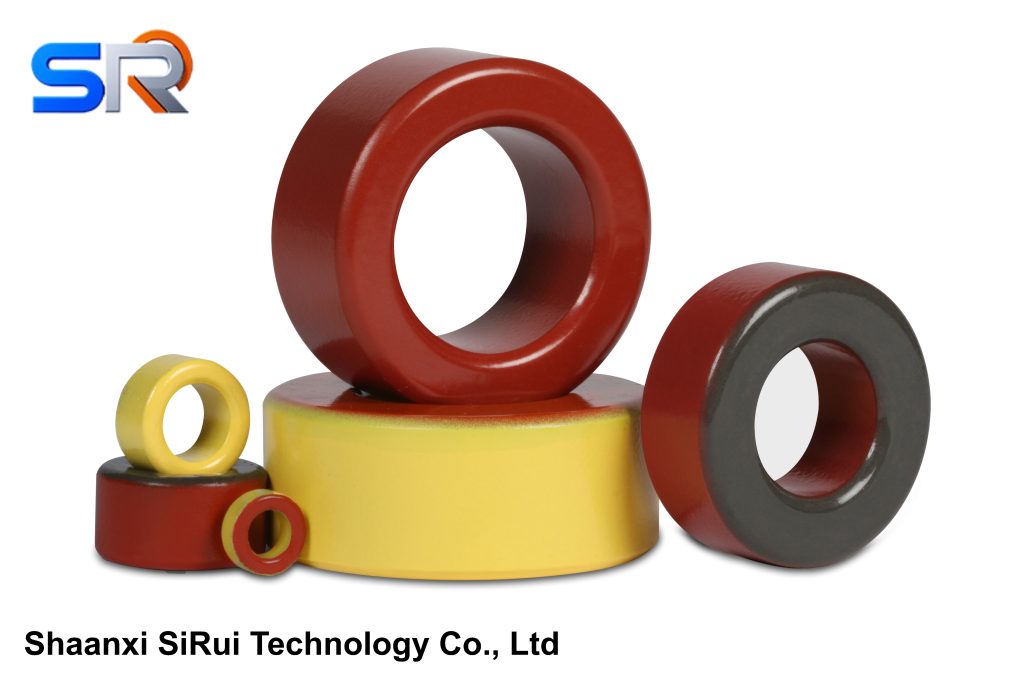
Alloy powder cores – Sendust (Kool Mu), MPP, High Flux, and Iron-Silicon – combine soft saturation, low core loss, and high energy storage, making them the preferred cores for high-current power inductors, DC-DC converters, and PFC circuits. This guide explains what alloy powder cores are, how they compare, and how to select one for your […]