
Air Core Inductor / Air Inductor: How It Works & Selection Guide
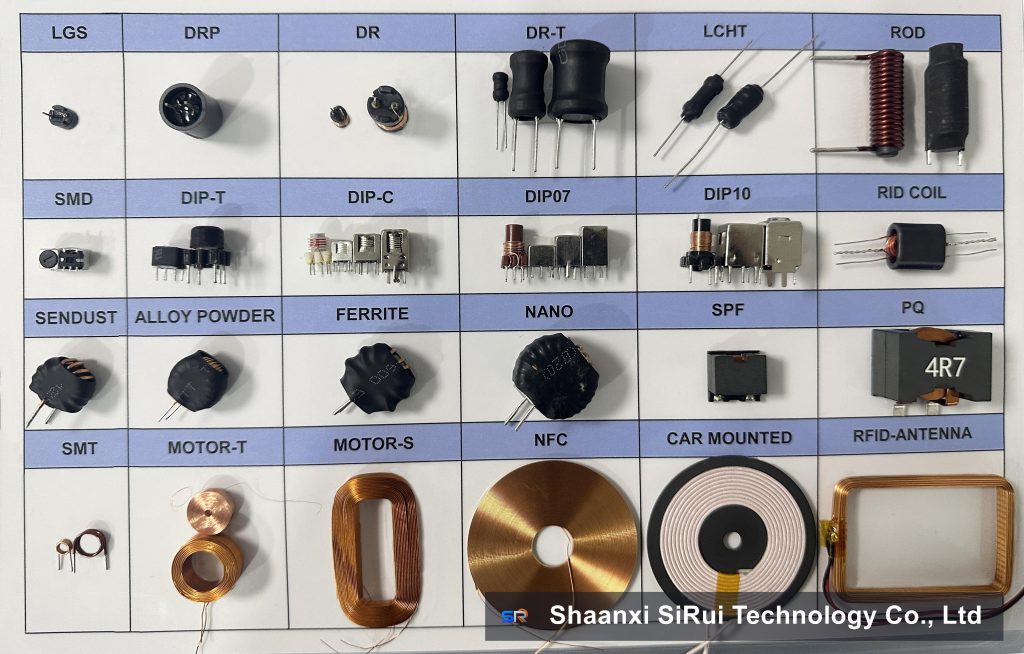
Air core inductors – wound on a non-magnetic core or on no core at all – are the choice when a design must be free of core saturation, immune to high-frequency core losses, and perfectly linear at high current. They are used in RF circuits, high-power switching supplies, and measurement applications where magnetic cores would […]
Mini PCB Current Transformer: How It Works & Selection Guide
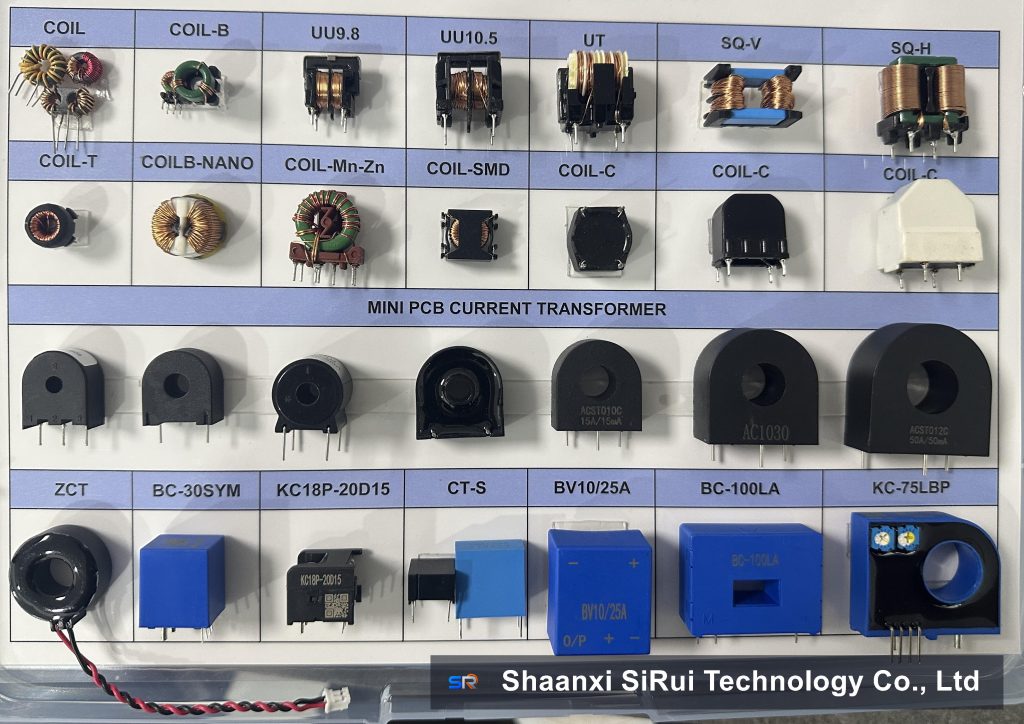
Mini PCB current transformers are tiny magnetic components that measure AC current directly on the printed circuit board – no isolation amplifier, no shunt resistor heat, no galvanic isolation worries. They are the standard solution for metering, monitoring, and protection circuits in compact electronic products. This guide explains how mini PCB current transformers work, their […]
Encapsulated Transformer: How It Works, Key Specs & Selection Guide
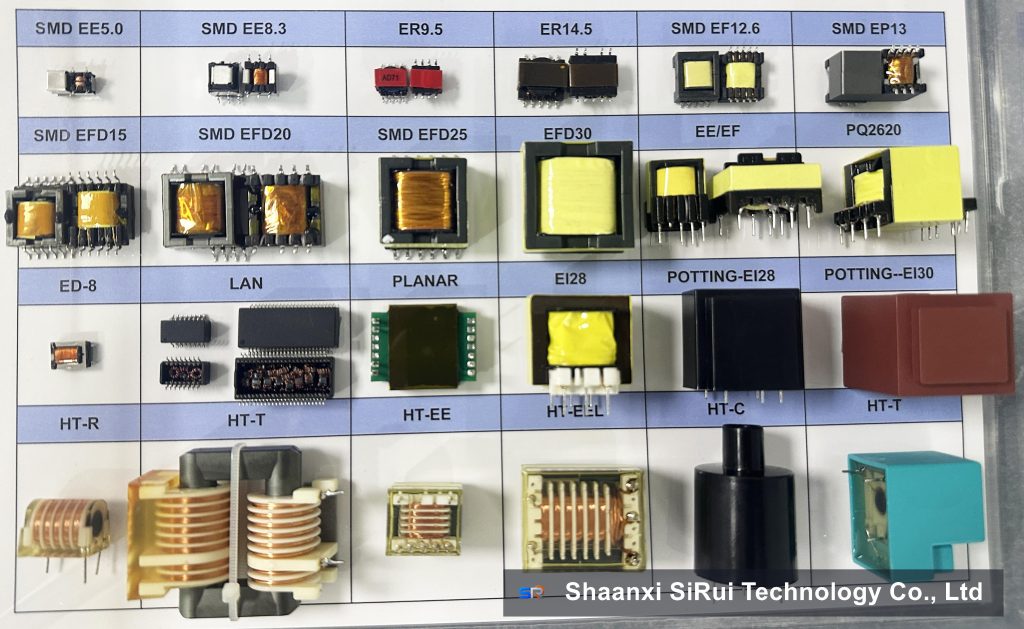
Encapsulated transformers – also called potted or cast-resin transformers – protect the windings with a sealed resin housing, which gives them outstanding moisture resistance, vibration immunity, and heat dissipation. They are the preferred choice for demanding industrial, outdoor, and safety-critical applications. This guide explains how encapsulated transformers work, their key specifications, and how to select […]
High Voltage Ignition Transformer: How It Works & Selection Guide
High voltage ignition transformers generate the 10-30 kV pulses that ignite gas burners, oil burners, and automotive fuel mixtures. Choosing the right ignition transformer determines ignition reliability, lifespan, and electromagnetic compatibility in your system. This guide explains how high voltage ignition transformers work, their key specifications, and how to select one for OEM and ODM […]
SMD Power Inductor: Key Specs & Selection Tips
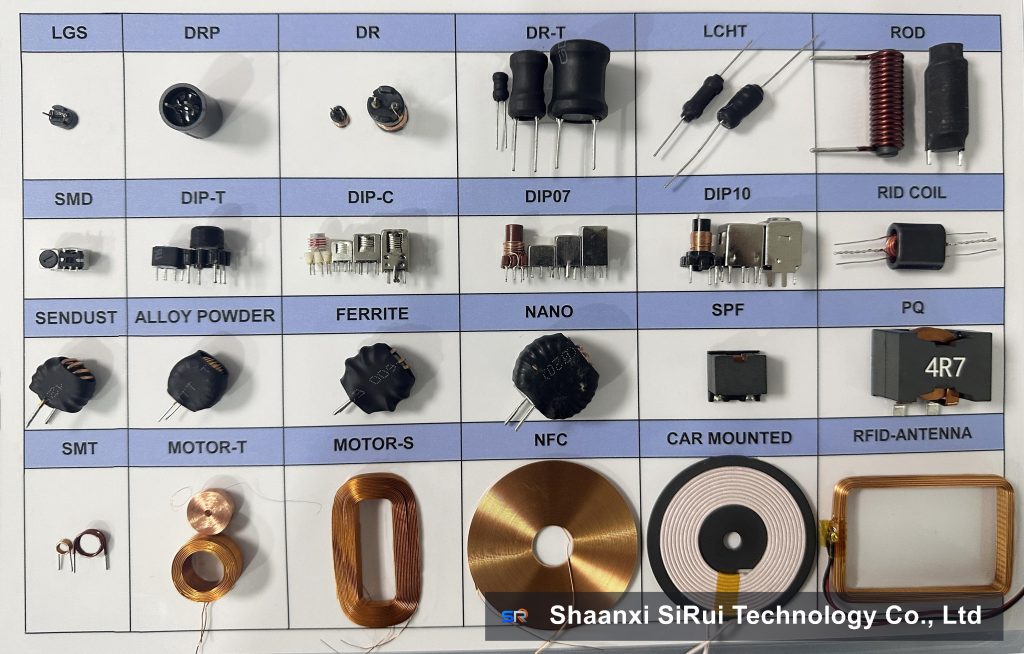
SMD (surface-mount) power inductors are the workhorse of compact power electronics – found in every DC-DC converter, VRM, and switching regulator on a PCB. Choosing the right SMD power inductor determines efficiency, ripple, and whether your design stays within its thermal budget. This guide explains the key specifications of SMD power inductors and how to […]
Nanocrystalline Core: Properties, Benefits & Selection Guide
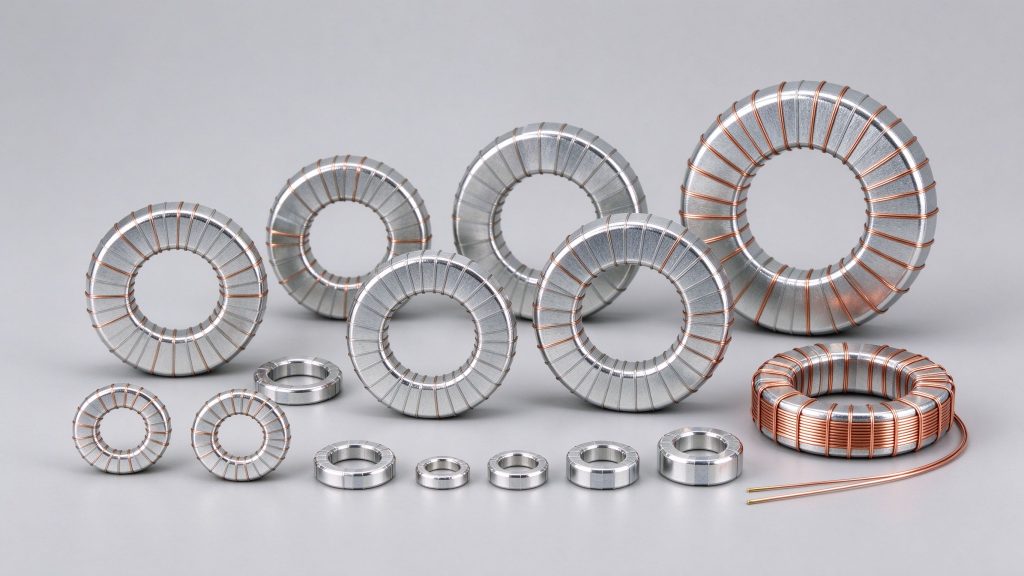
Nanocrystalline cores offer the highest permeability of any soft magnetic material while staying remarkably small and efficient, which is why they increasingly replace ferrite and silicon steel in current transformers, common mode chokes, and high-frequency power magnetics. This guide explains what nanocrystalline cores are, their key properties, and how to select one for your OEM […]
LAN Transformer / Ethernet Transformer: How It Works & Selection Guide
LAN (Local Area Network) transformers, also called Ethernet or network transformers, are the magnetic interface between the Ethernet PHY chip and the RJ45 connector. They provide signal coupling, common mode noise rejection, and electrical isolation that let 100BASE-TX, 1000BASE-T, and 2.5G/5G/10G Ethernet links meet EMC and surge requirements. This guide explains how LAN transformers work, […]
Common Mode Choke: How It Works & How to Choose
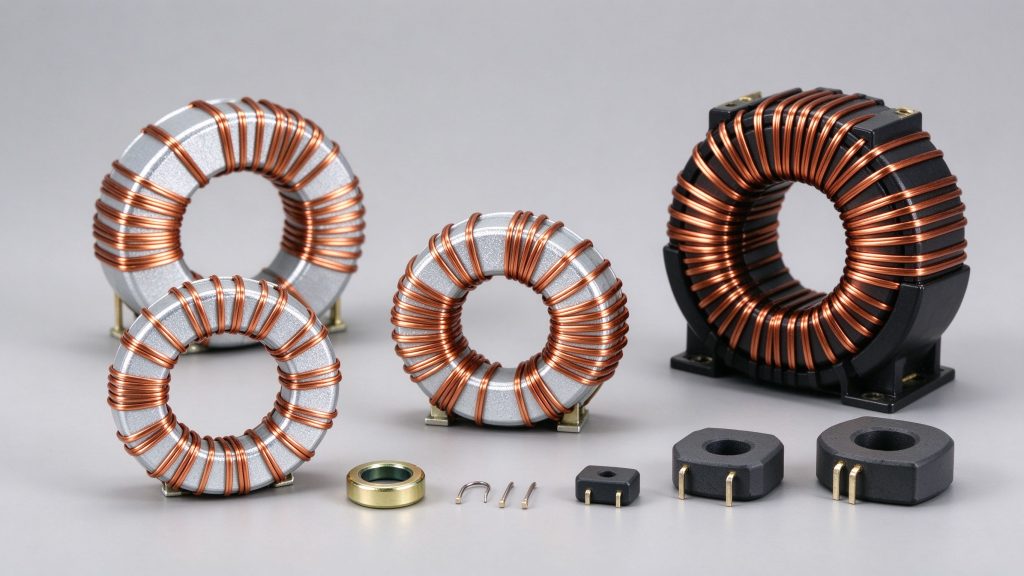
Common mode chokes are the first line of defense against electromagnetic interference (EMI) in power electronics. They filter common mode noise that flows between a circuit and earth, which is exactly the noise that fails EMC testing and disrupts sensitive equipment. This guide explains how common mode chokes work, the specifications that determine their performance, […]
Hall Effect Current Sensor: Working Principle & Key Specs
Hall effect current sensors measure both AC and DC current without breaking the circuit, using the magnetic field generated by the current itself. They are the standard solution for motor drives, EV chargers, battery management, and industrial monitoring where galvanic isolation and wide bandwidth matter. This guide explains how Hall effect current sensors work, the […]
Current Transformer: Working Principle, Types & Selection Guide
Current transformers (CTs) measure alternating current safely by scaling high currents down to levels instruments and relays can handle. They are essential in power metering, protective relaying, energy monitoring, and industrial automation – and choosing the right one depends on accuracy class, burden, frequency, and installation type. This guide explains how current transformers work, the […]